
The Supreme Court of India has stated that religious institutions must have structure and norms for their functioning, emphasising that the right to manage a religious institution does not imply an absence of order.

A nine-judge Supreme Court bench has reserved its order on petitions related to discrimination against women at religious places, including the Sabarimala temple, and the scope of religious freedom.

The Supreme Court on Monday said citizens must know the value of the right of freedom of speech and expression, and exercise self restraint as it mulled guidelines to regulate offensive social media posts.

The Supreme Court has reaffirmed that bail is the general rule, even in cases registered under the Unlawful Activities (Prevention) Act (UAPA), while granting bail to an accused in a narco-terror case.
The Supreme Court has raised concerns about the low conviction rates under the Unlawful Activities (Prevention) Act (UAPA), noting that over 90 per cent of trials result in acquittals. The observations were made while granting bail to an accused in a narco-terrorism case.
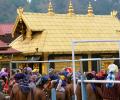
The Shabari story in the Ramayana found mention before a nine-judge constitution bench of the Supreme Court on Wednesday while hearing petitions related to discrimination against women at religious places, including the Sabarimala temple in Kerala.

The Supreme Court has disposed of a plea against the Netflix film 'Ghooskhor Pandit' after filmmaker Neeraj Pandey withdrew the title and promotional material. The court acknowledged Pandey's affidavit and expects the controversy to be resolved.

Karnataka Chief Minister Siddaramaiah has called for the establishment of a Supreme Court bench in South India to improve accessibility to justice. Speaking at a conference on Artificial Intelligence in the judiciary, he also highlighted the need to address algorithmic bias and ensure judicial independence in the age of AI.
The Supreme Court has quashed the conviction of a man in a rape case, noting the complainant and the convict have married each other and observed that the consensual relationship between the parties was given a criminal colour owing to a misunderstanding.

The Supreme Court of India has allowed a 17-year-old girl to terminate her 30-week pregnancy, emphasizing that courts cannot force a woman, especially a minor, to continue an unwanted pregnancy.

The Supreme Court of India has ruled that a minor child cannot be forced to carry a pregnancy to term, urging the government to amend laws to allow rape survivors to terminate unwanted pregnancies beyond 20 weeks.

Chief Justice of India Surya Kant cautioned against the uncritical adoption of AI in the judiciary, emphasising the need for human judgement and ethical considerations in judicial decision-making.
Chief Justice of India Surya Kant has cautioned against the uncritical adoption of Artificial Intelligence in the judiciary, emphasising the need to balance technological advancements with human intellect and ethical considerations.

The Supreme Court on Friday sought response from the Centre and others on a plea alleging that female sanitation workers at the Maharashi Dayanand University in Haryana were asked to prove through pictures of their private parts that they were menstruating.
The Travancore Devaswom Board (TDB), managing the Sabarimala temple, argued in the Supreme Court that religious beliefs should be judged subjectively by the community, as the court hears petitions related to discrimination against women at religious places.

The Centre has supported the restriction on women of menstruating age entering Kerala's Sabarimala temple, arguing that the Supreme Court's 2018 judgement assumes male superiority.

The Supreme Court questioned the chief priest of the Sabarimala Ayyappa Temple regarding the constitutionality of preventing believers from touching the deity, during hearings on discrimination against women at religious sites.
The Supreme Court has sought the Centre's response on a plea seeking the implementation of the 2023 Nari Shakti Vandan Act, which reserves one-third of seats for women in the Lok Sabha and state assemblies.

The Supreme Court has granted anticipatory bail to a software firm owner accused of sexually harassing an employee and attempting to frame her and her husband in a criminal case. The court has directed him to cooperate with the investigation and not to influence witnesses.
A nine-judge Supreme Court bench has commenced hearing on petitions related to discrimination against women at religious places, including the Sabarimala temple, and the scope of religious freedom across faiths.

The Centre has informed the Supreme Court that the restriction on women of menstruating age entering Kerala's Sabarimala temple is a matter of religious faith and denominational autonomy, falling outside the purview of judicial review. Solicitor General Tushar Mehta argued that courts should not apply 'secular standards of reason' to religious practices.
The Centre has asked the Supreme Court to reconsider its judgements decriminalising adultery and same-sex relationships, arguing they were based on a subjective application of 'constitutional morality'.
The Supreme Court has declined to hear a plea challenging the denial of parole extension to Santosh Kumar Singh, convicted in the 1996 Priyadarshini Mattoo murder case, while the Delhi High Court is already reviewing the matter.

The Supreme Court has granted bail to a doctor arrested for allegedly tampering with blood samples in the Pune Porsche crash case, where a minor is accused of killing two people.

The Supreme Court has granted bail to Vishal Agarwal, the father of the minor accused of driving the Porsche in the fatal Pune crash, in connection with the blood sample swapping case.
The Supreme Court of India has ruled that secretly recorded conversations between spouses are admissible as evidence in matrimonial cases, arguing that such snooping indicates a breakdown of trust and a troubled marriage.

The Supreme Court has raised concerns over the title of the film 'Ghooskhor Pandat', questioning its potential to denigrate a section of society. Notices have been issued to relevant authorities.
The Supreme Court of India has ordered the burial of a pastor whose body has been lying in a mortuary since January 7th, after a dispute arose regarding the location of his burial. The court issued a split verdict, with one judge ruling for burial on the family's private land and the other for a designated place away from the village. The decision was made due to the prolonged delay in the burial and the potential for unrest. The court ordered the state government to provide security to prevent any further incidents.

The Supreme Court stated that in a continuing marriage, neither husband nor wife can claim independence from their partner, emphasizing that marriage signifies the union of two souls.
The Supreme Court has allowed a minor boy, rusticated from an Indore school for circulating an objectionable meme, to appear for his Class 10 examination, directing the CISCE to issue an admit card.

Justice BV Nagarathna said she had to dissent against the demonetisation move by the central government as in 2016, when the decision was announced, the Rs 500 and Rs 1,000 notes comprised 86 per cent of the total currency notes in circulation, and 98 per cent of it came back after they were banned.
The Supreme Court of India quashed a rape FIR, stating the case was a consensual relationship that turned sour. The court emphasized the need for caution in identifying genuine rape cases versus disputes arising from consensual relationships.

The Supreme Court has directed the Centre to explore providing insurance covers to defence cadets who suffer injuries or disabilities during training, emphasizing the need to support these 'braveheart cadets'.

In a judgment of far-reaching implications, the Supreme Court on Wednesday ruled that a Muslim woman can seek maintenance from her husband under Section 125 of the CrPC and said the "religion neutral" provision is applicable to all married women irrespective of their religion.
A bench comprising Justices B V Nagarathna and R Mahadevan was hearing Seeman's plea challenging a Madras high court order refusing to quash the case against him.

The Supreme Court of India has expressed concern over the increasing tendency to label failed relationships as rape, emphasizing the need to distinguish between genuine sexual violence and consensual acts within a relationship.

She also said there was no independent application of mind by the Reserve Bank of India and only its opinion was sought, which cannot be said to be a recommendation.
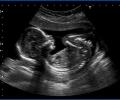
A two-judge bench of the Supreme Court on Wednesday pronounced a split verdict on the Centre's plea for recall of its October 9 order granting permission to a married woman, a mother of two, to terminate her 26-week pregnancy, with one judge voicing her disinclination to allow abortion and the other asserting that the woman's decision "must be respected".
The Supreme Court has observed that it would move cautiously while examining challenges to provisions of the Hindu Succession Act, 1956, and that it would be wary of shattering the Hindu social structure and its basic tenets that have been in existence for thousands of years.

The Supreme Court of India has appealed to women, particularly Hindu women without sons, daughters, or husbands, to make wills to avoid potential property disputes, highlighting the increasing number of women with self-acquired property.
